
TrainingRead at source ↗Why Promoting the Best Technician or Pilot to Instructor Often Fails, and Five Skills That Close the Gap 40º West Pitches Airline Training Software That Feeds Flight Data Back Into Simulator Scenarios
 Keeping Flight Instructors Standardised Is Harder Than Setting the Standard, Australian Training Chief Argues
 New SCOPE Workshop and EATS Maintenance Stream Tackle How to Train More Engineers Without Cutting Safety Corners
Thai Airways operations chief tells APATS pilots need training in judgment, not just checklists
Source: Halldale (Civil Aviation Training magazine)· 1 Sept 2026
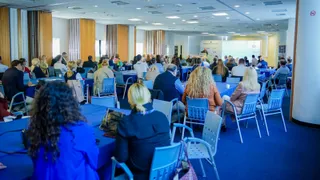
Speaking at APATS 2026 in Bangkok, Thai Airways chief of operations Captain Chawan Ratanawaraha argued that conventional simulator training can leave pilots underprepared for failures that fall outside scripted checklists. He described his own MD-11 simulator session in which he completed every step of an emergency procedure after a simulated all-engine flameout, but was later challenged by an instructor for not restarting the engines once the checklist's steps ran out — "the checklist ended," he said, "but the problem remained." He cited two real-world cases to make the same point: a Boeing 747 crew that used a non-standard method to work around a hydraulic failure, and the crew of a DHL Airbus A300 struck by a missile over Baghdad in 2003, who regained control using differential engine thrust rather than any documented procedure. Captain Chawan laid out five capabilities he believes resilient pilots need beyond procedural knowledge: understanding the aircraft itself, prioritising competing problems, deciding under uncertainty, coordinating with the rest of the crew, and what he called "recovery thinking" — continuing to search for a way to survive once standard responses are exhausted. He linked the argument to newer risks simulators rarely rehearse, including geopolitical conflict, GNSS jamming and increasingly interconnected aircraft systems, and urged instructors to stop treating the simulator's own boundaries as the limit of a pilot's thinking.
Speaking at APATS 2026 in Bangkok, Thai Airways chief of operations Captain Chawan Ratanawaraha argued that simulator training over-indexes on procedure completion and under-prepares pilots for failures with no scripted response. He pointed to real-world incidents where crews departed from standard procedure to save the aircraft.
Original reporting
Halldale (Civil Aviation Training magazine)
Related in Training
Training
A guest article drawn from a cabin-crew stream talk at WATS 2026 argues that technical expertise and teaching ability are different skills. It sets out five instructor competencies and three steps for selecting and developing instructors.
27 Oct 2026 · 1 min read
Source: Halldale· Debbie Curl-Nagy
Training
The Spanish-linked vendor's CEO says its training management system is tailored to each airline's own processes and was rolled out at Air Europa over a year. He also warns that CBTA adoption hinges on standardising instructors' assessment judgement.
26 Oct 2026 · 1 min read
Source: Halldale· Emma Vandore
Training
Basair Aviation College's COO told APATS 2026 that maintaining instructor consistency over time is the real challenge. He names feedback as the hardest element to standardise and says failure data should be tracked per instructor and per course.
26 Oct 2026 · 1 min read
Source: Halldale
Training
Halldale and T-C-Alliance are launching SCOPE, a two-day implementation workshop before EATS 2026, while the maintenance stream covers competency-based and digital CBTA delivery. Part-IS is the worked example for fitting new rules into training.
19 Oct 2026 · 1 min read
Source: Halldale· Emma Vandore
Latest in Training
01
02
03
04